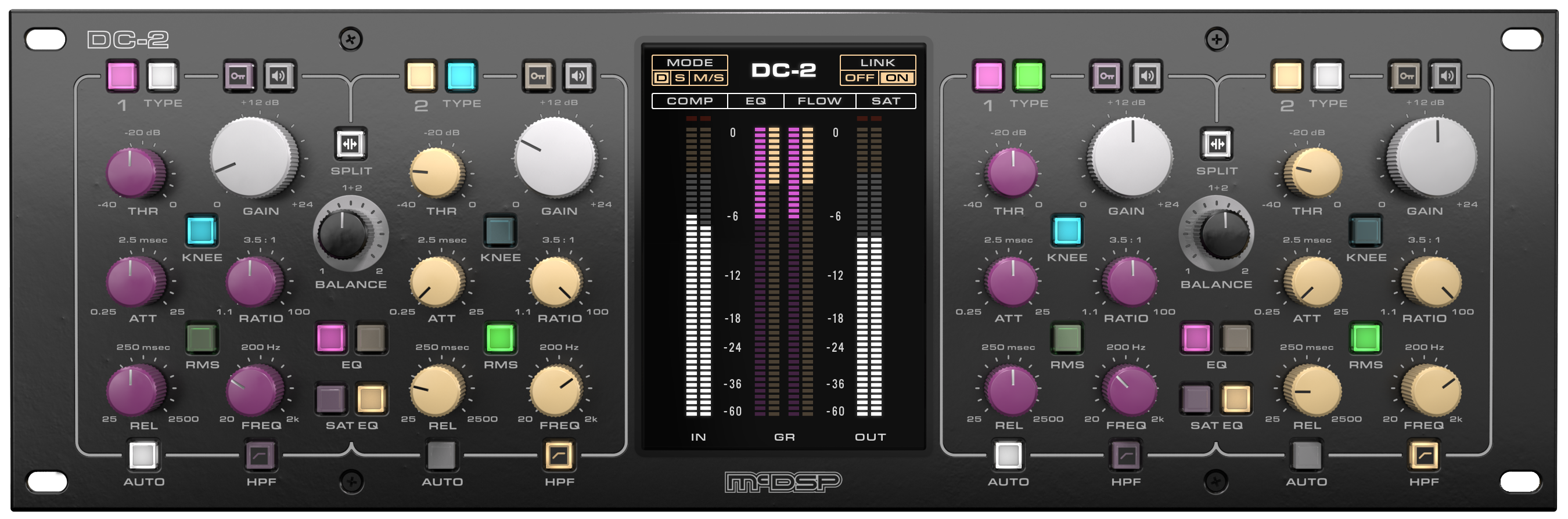
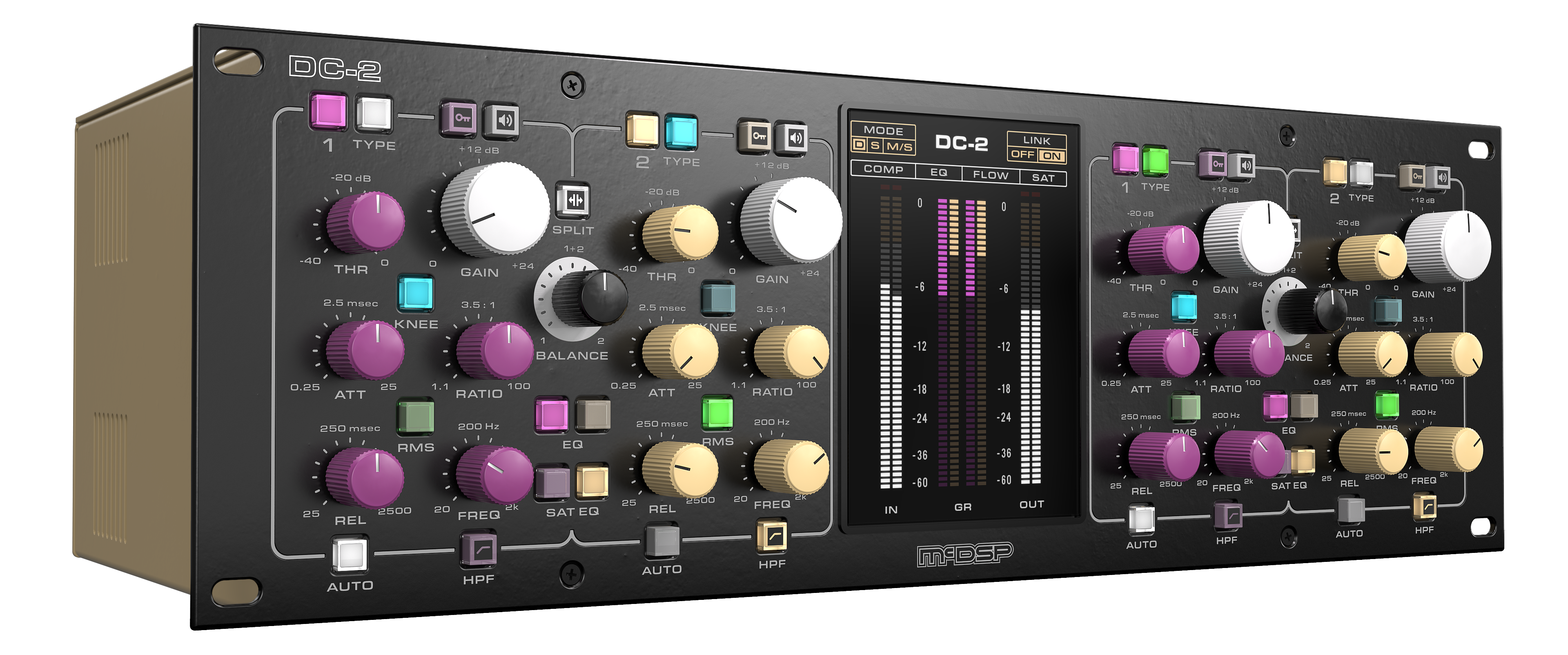
The DC-2 is a dual channel dual analog compressor. Two independent fully programmable compressors can be placed in series or in parallel (split) processing modes, and mixed with a dedicated balance control. Several compression models are available including FET, VCA, and Optical derived algorithms that operate entirely in the analog domain. Each compressor has its own side chain filter, programmable knee shape, peak and rms modes, and auto release. Two bands of EQ can be placed pre or post each analog compressor. The analog processing includes a customizable saturation section.
The DC-2 offers independent (or linked) control of the left/right or mid/side channels. Visual feedback includes metering of input, output, and each dual compressor on each channel, along side signal flow and compression curve displays.
Features
Dual analog compression in series or parallel (split) configurations
Analog compression models for FET, VCA, and Optical designs
Programmable Knee shape, Peak and RMS modes, side chain filter shapes, and auto release
Dual, stereo and mid/side processing options
Double precision digital equalizer (pre or post analog stages)
Sample accurate automation of analog processing
Included with APB hardware purchase
Formats
AAX Native, AU, VST3
Complete Control
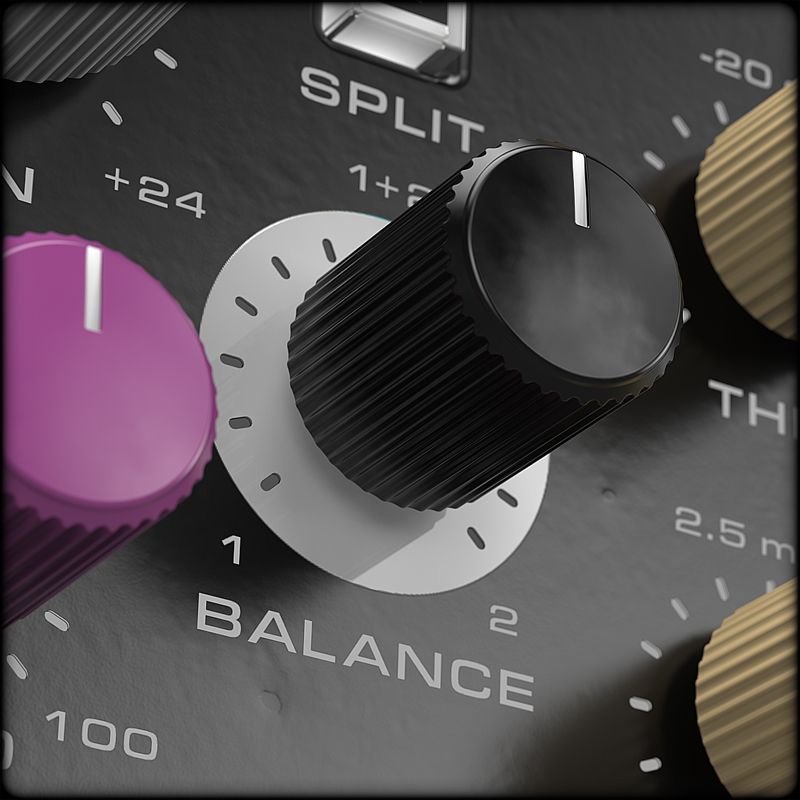
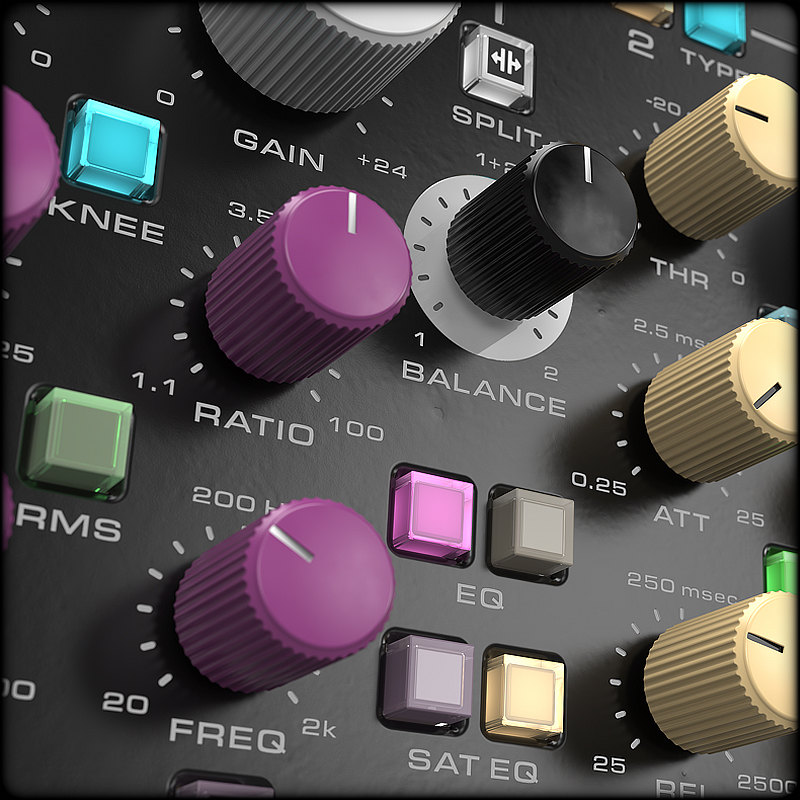
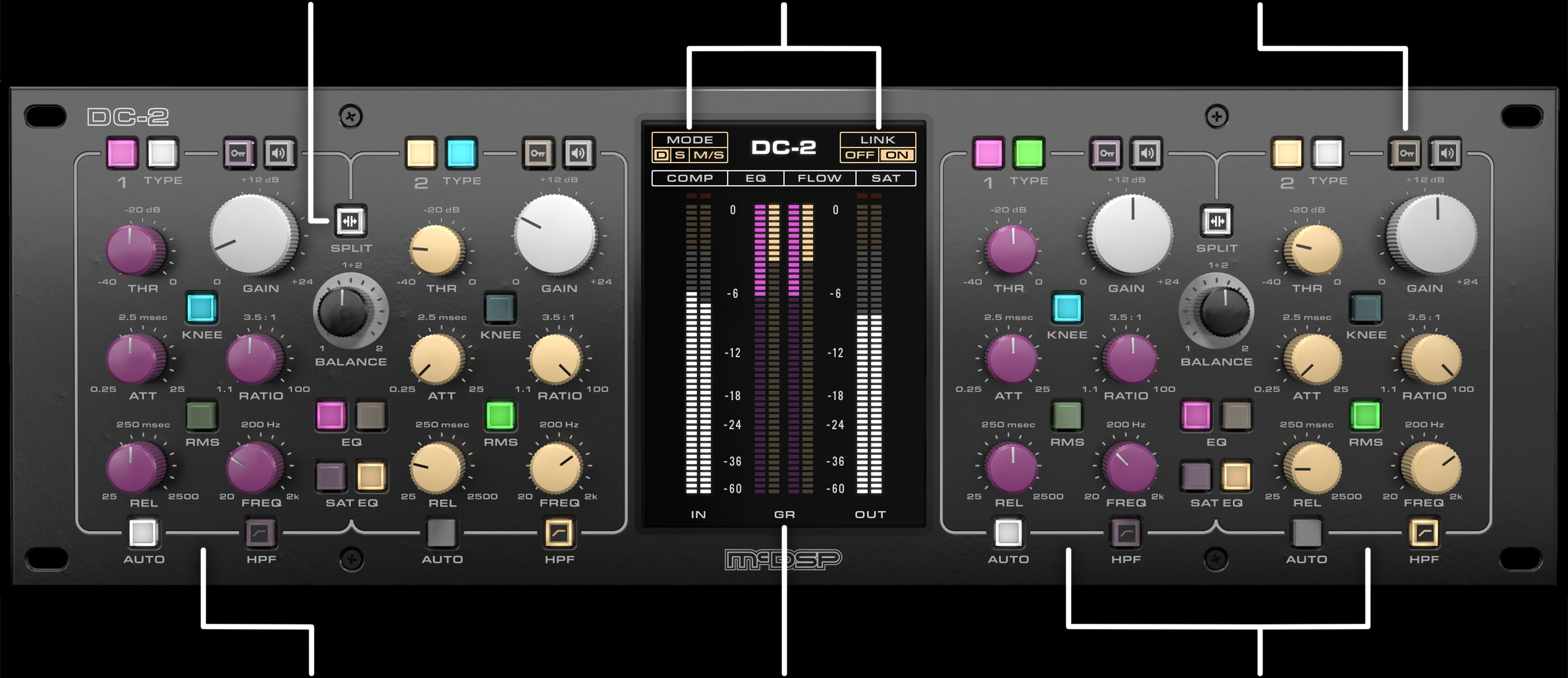
The DC-2 two analog compressor per channel configuration can be readily adjusted with a unique Balance control, whether in series or parallel (split) processing mode. Each compression stage is fully adjustable with independent Threshold, Makeup Gain, Attack, Release, Ratio and HPF filter. Two bands of EQ can be placed before or after all analog processing for even more tone control.
Programmable Analog
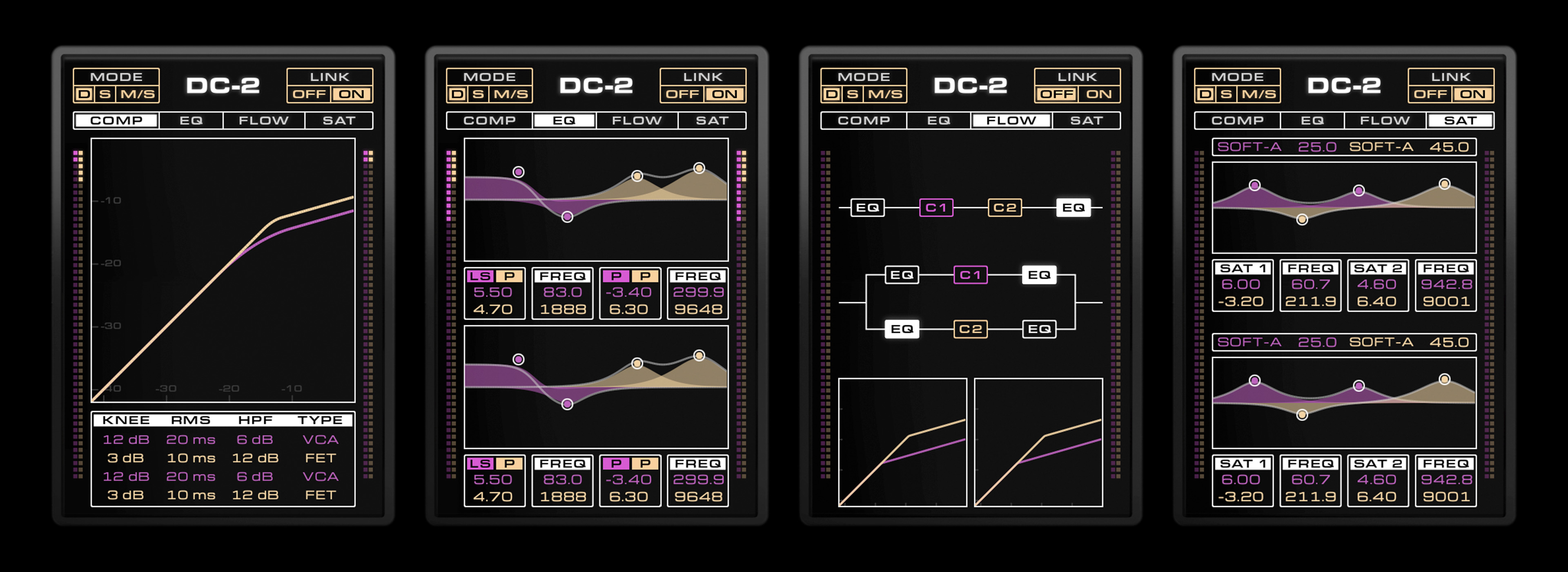
The APB is the world’s first programmable analog processor, and the DC-2 takes full advantage of the APB hardware capabilities. Each compressor has a variety of compression knee shapes, RMS modes, HPF options, and no less than three all-analog models of FET, VCA, and Optical (OPTO) processing.
Custom Saturation
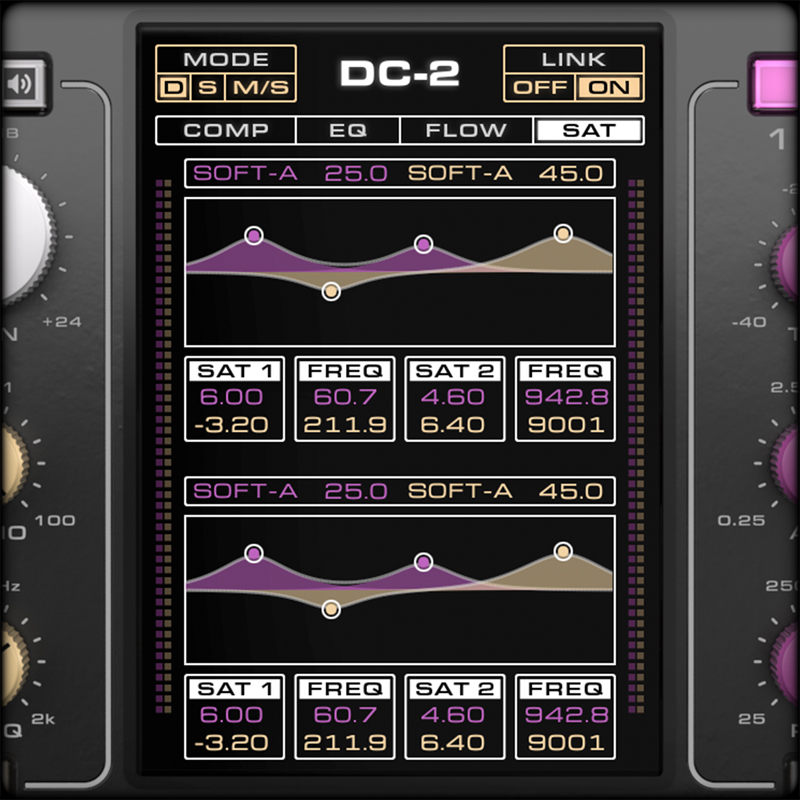
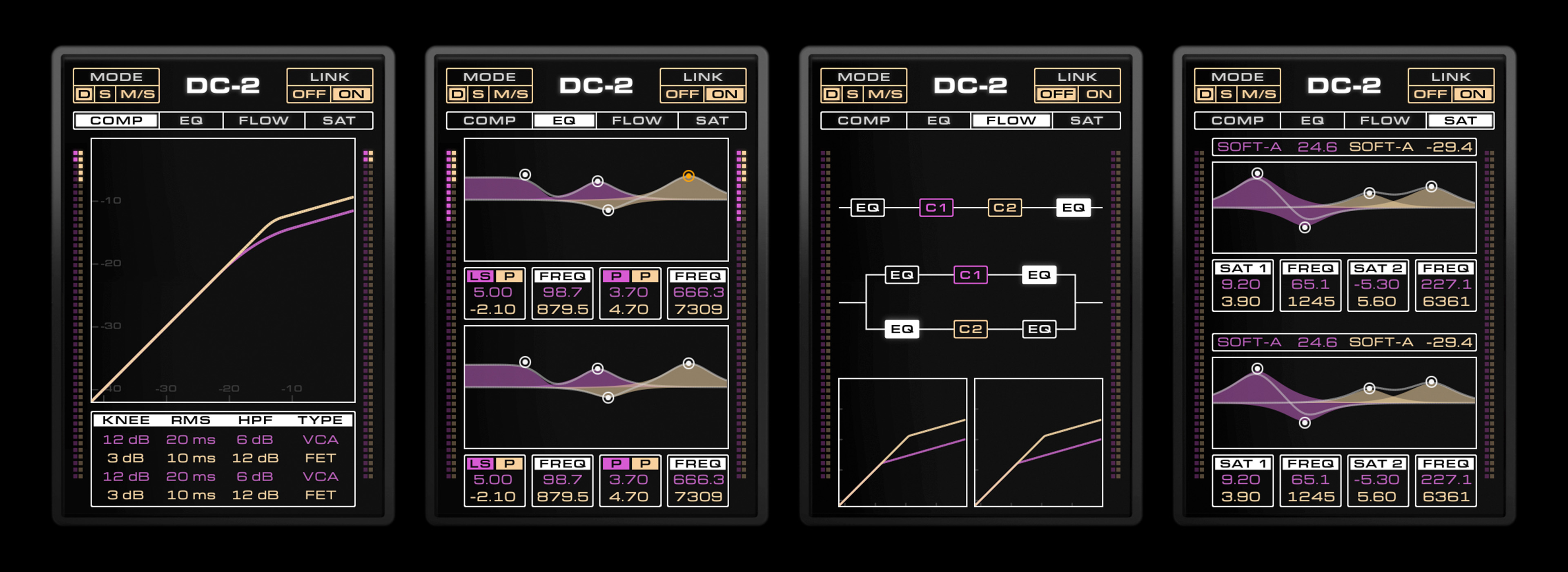
The final stage of processing is a multi-mode saturation circuit. Two bands of EQ-like control over the analog saturation can setup the perfect tone. And if you need two perfect saturation setups when processing in parallel, a second saturation stage appears when Split mode is enabled. A Saturation Adjust can vary the overall amount of analog saturaiton without affecting output level.
EQ Too
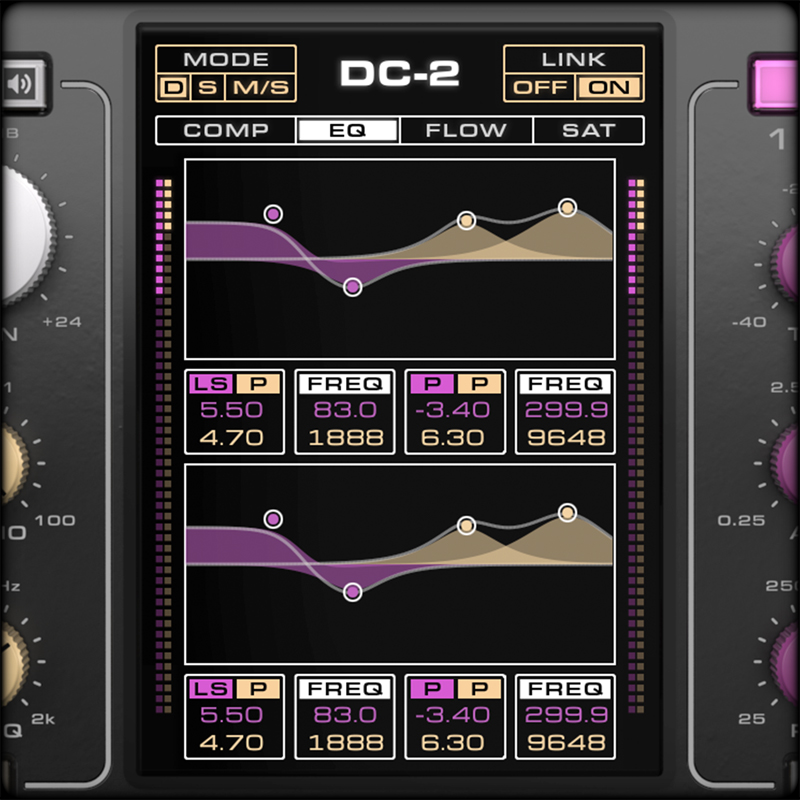
The DC-2 includes two bands of EQ that can be placed before or after all analog processing. EQ shapes include low shelf, parametric, and high shelf. Great for making final adjustments, or creating distinct tones for each dual compressor when operating in parallel (split) mode. As done in the custom saturation stage, when using the parallel (split) mode, a second set of controls appear for another two bands of EQ, so that both signal paths have a dedicated EQ.
Balance and Split
The dual compressors in each DC-2 channel can be routed in series or in parallel (split). A mix of the compressor processing is adjusted from the Balance control.
Link and Processing Modes
All left and right channel controls can be linked as needed. Processing modes include mono, stereo, mid/side options.
Side Chain
Each compressor can be independently triggered by an input or side chain signal. Side chain monitoring is also available.
Analog Compression
Each compression stage is a fully analog process with full control over all compression characteristics.
Metering
Meters for input, gain reduction of all four compressor, and output appear in the DC-2 Center section.
Programmable Analog
In addition to standard compression controls, further adjustments include knee size, RMS window size, auto release, and HPF shapes.
Center Section
The DC-2 main controls cover all the most common analog compression adjustments, but the DC-2 Center Section offers even more programmability. In these sections the user can adjust knee shape, RMS modes (window size and blend with peak detection), HPF options, and compression algorithm types. The Center Section also includes control for EQ, signal flow, and all saturation circuit customization.
An important aspect of any APB plug-in is that the plug-in is primarily a controller. The APB plug-in takes the input audio signal, combines it with a control signal, and sends both along a Thunderbolt connection to an APB unit for processing. The control signal sets up the analog components to do the selected algorithm with all the parameter values, and the audio signal is converted to the analog domain. The analog version of the audio signal is processed in the analog domain, and then converted back to the digital domain.
By operating the APB hardware from an APB plug-in in this way, all user controllable parameters are recallable and can be saved as presets. Furthermore, because the control signal is married to the input audio signal, parameters can be updating during playback with sample accurate automation.
Sound Examples
Blues Mix
Funk Mix 1
Funk Mix 2
R&B Mix
Rock Mix
"This is the future."
Tony Maserati
Grammy award winning mix engineer
"The MC-3's retro ’70s interface chimes well with the sound, which employs fairly aggressive and ‘grabby’ FET‑style compression."
"The MC-3's retro ’70s interface chimes well with the sound, which employs fairly aggressive and ‘grabby’ FET‑style compression."
"The MC-3 is a beast! It’s a utility processor that also has powerful tonal and dynamic-shaping properties combined with the big analog sound and saturation of the APB architecture."
"The MC-3 is a beast! It’s a utility processor that also has powerful tonal and dynamic-shaping properties combined with the big analog sound and saturation of the APB architecture."